
Dupuytren’s Contracture Release
Innovative Solutions for Hand Flexion Disorders
Dupuytren’s contracture surgery encompasses surgical procedures aimed at treating Dupuytren’s contracture, a condition that causes thickening and shortening of the connective tissue in the palm, leading to the fingers being drawn inward. At Melbourne Orthopaedic Clinic, we provide advanced treatment options, including fasciectomy and needle aponeurotomy, to restore hand function and improve quality of life.
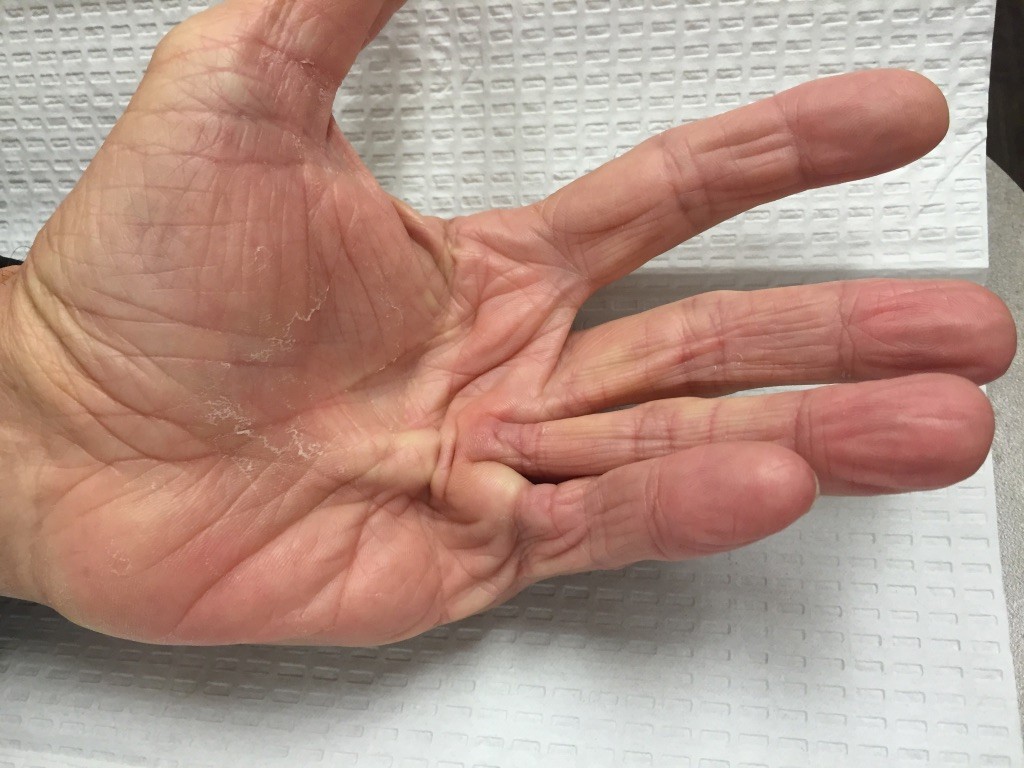
What is Dupuytren’s Contracture?
Dupuytren’s contracture is characterised by the gradual thickening and tightening of the palmar fascia, the tissue beneath the skin of the palm. This condition can lead to one or more fingers bending towards the palm, making it difficult to fully extend the fingers. Symptoms may include:
- A noticeable lump or nodule in the palm
- Thickened tissue or cords beneath the skin
- Reduced finger extension, particularly in the ring or little finger
Indications for Dupuytren’s Contracture Surgery
Surgery for Dupuytren’s contracture is generally recommended for patients experiencing:
- Significant contracture that limits hand function or affects daily activities
- Progression of the condition that has not responded to non-surgical treatments
- Severe cases where the fingers cannot be fully straightened
Surgical Options
There are two primary surgical approaches to treat Dupuytren’s contracture:
- Fasciectomy:
This procedure involves the removal of the thickened tissue (fascia) causing the contracture. The surgery typically involves:- Anaesthesia: Performed under local or general anaesthesia for patient comfort.
- Incision: An incision is made in the palm to access the affected tissue.
- Tissue Removal: The surgeon carefully removes the affected fascia, freeing the fingers.
- Closure: The incision is closed with sutures, and a dressing is applied.
- Needle Aponeurotomy:
This minimally invasive procedure involves using a needle to puncture and break the thickened tissue. The process includes:- Anaesthesia: Generally performed under local anaesthesia to minimise discomfort.
- Needle Insertion: A needle is inserted into the thickened tissue to release the contracture.
- Immediate Results: The fingers can often be straightened immediately after the procedure.
- Post-Procedure Care: Patients are given instructions for hand therapy and care following the treatment.
Recovery After Dupuytren’s Contracture Surgery
Recovery from Dupuytren’s contracture surgery varies based on the procedure performed:
- Hospital Stay: Patients may go home the same day for both procedures.
- Pain Management: Pain relief medications will be prescribed as needed.
- Rehabilitation: A physical therapy program will often be initiated to regain strength and mobility in the hand.
- Activity Restrictions: Patients are advised to avoid heavy lifting and strenuous activities for a period following surgery.
Long-Term Outcomes
Most patients experience significant improvement in hand function and a reduction in contracture symptoms following Dupuytren’s contracture surgery. The goal is to restore the ability to extend the fingers and enhance overall quality of life.

Risks and Complications
As with any surgical procedure, Dupuytren’s contracture surgery carries potential risks, including:
- Infection at the surgical site
- Nerve injury or stiffness in the fingers
- Recurrence of contracture
Our expert team at Melbourne Orthopaedic Clinic will discuss these risks in detail with you and provide comprehensive preoperative guidance to help minimise complications.
Dupuytren’s contracture surgery offers effective solutions for individuals struggling with finger contractures. With the expertise of our specialists at Melbourne Orthopaedic Clinic, you can expect personalised care aimed at restoring hand function and improving your overall well-being.