
Laminectomy
Relieving nerve compression for enhanced mobility
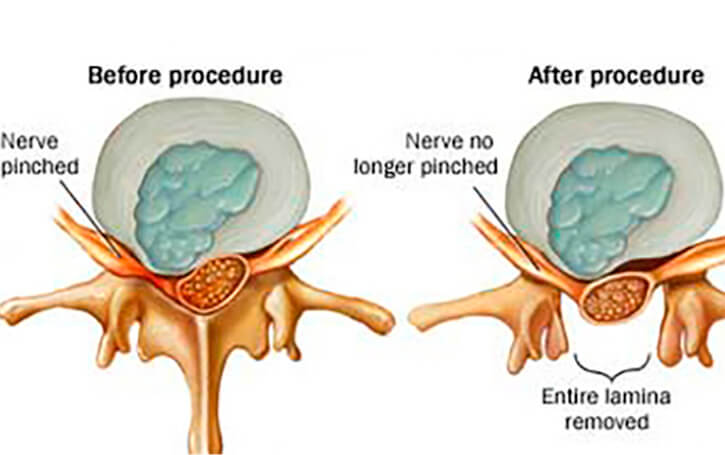
Laminectomy is a type of spine surgery where a small section of bone called the lamina is removed from a vertebra. The lamina forms part of the spinal canal, and taking it away creates more space around the spinal cord and nerves.
This procedure is often performed to relieve pressure caused by conditions such as spinal stenosis, herniated discs, or, less commonly, spinal tumours. By reducing compression on the nerves, laminectomy can help ease symptoms such as pain, numbness, or weakness, and in many cases, improve mobility and function.
What is Laminectomy?
Laminectomy is a surgical procedure that removes a portion of the vertebra called the lamina. The lamina forms part of the bony arch at the back of the spine and helps protect the spinal cord. When conditions such as spinal stenosis, a herniated disc, or bone overgrowth narrow the spinal canal, the lamina may be removed to create more space. This helps relieve pressure on the spinal cord or nerves, which can reduce symptoms such as pain, tingling, numbness, or weakness in the back, arms, or legs.
Laminectomy may be performed on its own or in combination with other spinal procedures, depending on the underlying condition and the degree of nerve compression.
Indications for Laminectomy Treatment
Laminectomy may be considered when spinal conditions cause ongoing nerve compression that does not improve with non-surgical treatments. Common reasons include:
- Spinal stenosis – Narrowing of the spinal canal that puts pressure on the spinal cord or nerves, often leading to pain, numbness, or weakness.
- Herniated disc – When part of a disc presses on nerves, and other treatments such as physiotherapy or injections have not provided relief.
- Bone overgrowth (osteophytes) – Extra bone formation due to arthritis or degenerative changes that reduces space in the spinal canal.
- Spinal tumours – In rare cases, laminectomy may be needed to remove or access tumours affecting the spinal cord or nerves.
- Persistent symptoms – Severe or long-lasting leg or arm pain, numbness, tingling, or weakness that interferes with daily activities despite conservative care.
- Loss of bladder or bowel control – In rare but urgent situations, such as cauda equina syndrome, immediate surgery may be required to relieve pressure on nerves.
Laminectomy is usually recommended only after non-surgical options have been tried, unless there are signs of severe nerve compression that require urgent intervention.
The Laminectomy Procedure
- Anaesthesia – Laminectomy is performed under general anaesthesia so the patient is asleep and pain-free during surgery.
- Incision – A small incision is made over the affected area of the spine to access the vertebra.
- Removal of the lamina – The surgeon carefully removes part or all of the lamina to create more space in the spinal canal and relieve pressure on the spinal cord or nerves. In some cases, surrounding bone spurs or disc material may also be removed.
- Stabilisation (if required) – If there is concern about spinal stability, laminectomy may be combined with spinal fusion, where two or more vertebrae are joined together with bone grafts and instrumentation.
- Closure – The incision is closed with sutures or staples, and a sterile dressing is applied.
Recovery After Laminectomy
- Hospital stay – Depending on the extent of surgery, patients may go home the same day or stay in hospital for one to a few nights.
- Mobility – Walking is usually encouraged soon after surgery to support circulation and reduce stiffness.
- Pain management – Medications are provided to help manage discomfort at the surgical site.
- Wound care – The incision should be kept clean and dry; instructions will be given for dressing changes and removal of sutures or staples.
- Activity restrictions – Heavy lifting, twisting, and strenuous exercise are generally avoided for several weeks to protect the spine while it heals.
- Physiotherapy – A rehabilitation program may be recommended to restore spinal flexibility, strengthen supporting muscles, and improve posture.
- Return to activities – Many people resume light activities within a few weeks, but full recovery may take several months, particularly if fusion was performed.
Recovery time varies for each person and depends on the reason for surgery, overall health, and adherence to rehabilitation.
Long-term Outcomes
The goal of laminectomy is to relieve pressure on the spinal cord and nerves, helping to reduce pain and improve mobility. Many patients experience significant symptom relief, such as reduced leg pain, improved walking tolerance, and enhanced quality of life.
Long-term outcomes may include:
- Sustained pain relief – Many people report ongoing improvement in nerve-related symptoms, particularly leg pain caused by spinal stenosis.
- Improved mobility and function – Restoring spinal canal space may allow greater ease of movement and return to normal activities.
- Reduced reliance on medication – Successful surgery may lessen the need for long-term pain management.
- Potential for recurrence – In some cases, spinal degeneration can progress, or symptoms may recur over time, requiring further management.
- Spinal stability – When combined with fusion or stabilisation techniques, laminectomy can help maintain long-term spinal alignment and strength.
Regular follow-up and adherence to rehabilitation and lifestyle recommendations may support the best possible long-term results.
Risks and Complications
As with any surgical procedure, a laminectomy carries potential risks, which may include:
- Infection at the surgical site
- Bleeding
- Nerve injury or damage
- Recurrence of symptoms or the need for additional surgery
Laminectomy can be a highly effective option for relieving nerve compression caused by conditions such as spinal stenosis, herniated discs, or spinal tumours. With the care of our team at Melbourne Orthopaedic Clinic, you will receive tailored treatment and ongoing support aimed at restoring spinal health, improving mobility, and enhancing quality of life.