Shoulder Impingement and Rotator Cuff Pathology
Conditions affecting the muscles, tendons, ligaments, and soft tissues of the shoulder that may cause pain, weakness, and reduced function.
Shoulder pain is not always caused by arthritis or bone-related conditions. In many cases, symptoms arise from injury, overuse, or degeneration of the soft tissues that support and stabilise the shoulder joint. These soft tissues include muscles, tendons, ligaments, the joint capsule, and surrounding bursae.
Shoulder soft tissue pathology can affect people of all ages and activity levels, from athletes and manual workers to older adults. Symptoms may develop gradually or occur suddenly after an injury, and can significantly impact daily activities such as lifting, reaching, sleeping, and overhead movement.
At Melbourne Orthopaedic Clinic, shoulder soft tissue conditions are assessed through a thorough clinical evaluation and appropriate imaging to identify the cause of symptoms and guide individualised management.
On this page, you’ll learn about:
- What is shoulder impingement and rotator cuff pathology?
- Rotator cuff tears and inflammation
- Shoulder impingement and bursitis
- Shoulder and biceps tendon injuries
- Shoulder instability and dislocations
- How shoulder impingement and rotator cuff pathology is diagnosed
- Treatment options for shoulder impingement and rotator cuff pathology
- Managing shoulder impingement and rotator cuff pathologyconditions
What is shoulder impingement and rotator cuff pathology?
Shoulder soft tissue pathology refers to a group of conditions that affect the non-bony structures around the shoulder joint. These structures play a vital role in maintaining shoulder stability, strength, and smooth movement.
Common shoulder soft tissue conditions include:
- Rotator cuff tears and inflammation
- Shoulder impingement and bursitis
- Biceps tendon injuries
- Shoulder instability and dislocations
These conditions may occur in isolation or alongside other shoulder problems, and accurate diagnosis is essential to guide appropriate treatment.
The rotator cuff is a group of four muscles and tendons that stabilise the shoulder joint and allow controlled arm movement. Rotator cuff pathology may involve inflammation (tendinopathy) or partial or full-thickness tears.
Symptoms may include:
- Shoulder pain, particularly with lifting or overhead use
- Weakness in the arm
- Night pain or difficulty sleeping on the affected side
- Reduced range of motion
Rotator cuff tears can occur due to degeneration over time, acute injury, or repetitive overhead activity. The severity of symptoms varies depending on the size of the tear and the condition of surrounding tissues.
Shoulder impingement occurs when the rotator cuff tendons or bursa become compressed during shoulder movement, often beneath the acromion (part of the shoulder blade). This can lead to irritation, inflammation, and pain.
Bursitis refers to inflammation of the subacromial bursa, a fluid-filled sac that reduces friction between tissues.
Common symptoms include:
- Pain with lifting or reaching overhead
- Pain at the front or side of the shoulder
- Discomfort during repetitive arm movements
- Night pain in some cases
Impingement and bursitis often develop gradually and may be associated with posture, muscle imbalance, or repetitive activity.
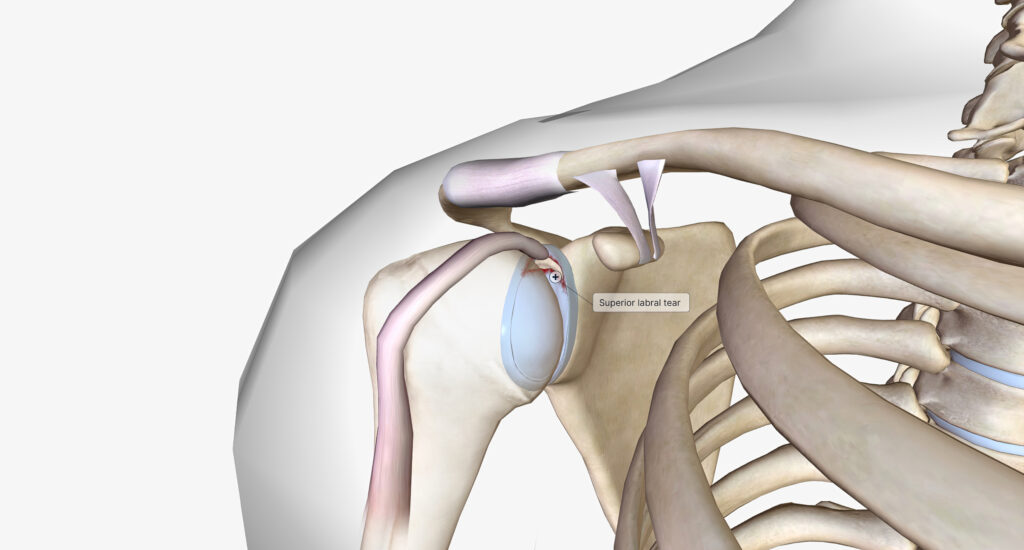
The biceps tendon plays an important role in shoulder and elbow movement. Injury to the long head of the biceps tendon may occur on its own or alongside rotator cuff or labral pathology.
Biceps tendon conditions may include:
- Tendinopathy or inflammation
- Partial tearing
- Complete rupture
Symptoms may include pain at the front of the shoulder, clicking sensations, weakness, or discomfort with lifting and pulling activities. Biceps tendon problems are commonly associated with overhead use or shoulder instability.
Shoulder instability occurs when the ball of the shoulder joint moves excessively or comes out of the socket. This may range from subtle instability to full dislocation.
Instability may be caused by:
- Traumatic injury, such as a fall or sporting collision
- Recurrent dislocations
- Damage to the labrum or joint capsule
- Congenital joint laxity in some individuals
Symptoms may include a feeling of the shoulder “giving way,” pain, apprehension with certain movements, or repeated dislocations. Recurrent instability can increase the risk of further soft tissue damage if left untreated.
How shoulder impingement and rotator cuff pathology is diagnosed
Diagnosis begins with a detailed clinical assessment, including a review of symptoms, activity levels, and prior injuries.
Imaging may include:
- X-rays to assess bone structure and joint alignment
- MRI to evaluate tendons, muscles, labrum, and bursae
- Ultrasound in selected cases to assess tendon or bursal pathology
Accurate diagnosis allows treatment to be tailored to the specific condition affecting the shoulder.
Treatment options for shoulder impingement and rotator cuff pathology
Treatment depends on the type and severity of the condition, symptoms, and individual needs.
Non-surgical management
Many shoulder soft tissue conditions can be managed without surgery and may include:
- Physiotherapy to improve strength, movement control, and flexibility
- Activity modification to reduce aggravating movements
- Pain-relieving medications as advised by your doctor
- Targeted injections in selected cases
Surgical treatment
Surgery may be considered when symptoms persist despite appropriate non-surgical treatment or when there is significant structural damage. Surgical options may include arthroscopic repair, tendon procedures, or stabilisation surgery, depending on the underlying pathology. a fall or sporting collision
- Recurrent dislocations
- Damage to the labrum or joint capsule
- Congenital joint laxity in some individuals
Symptoms may include a feeling of the shoulder “giving way,” pain, apprehension with certain movements, or repeated dislocations. Recurrent instability can increase the risk of further soft tissue damage if left untreated.
With appropriate assessment and treatment, many people experience improvement in pain and shoulder function. Early evaluation and tailored management may help prevent progression and support long-term joint health.
During your consultation, your surgeon will explain the nature of your shoulder condition and discuss management options that align with your symptoms, lifestyle, and goals.